
The Dinosaur in the Pond: Modern Traits Inherited from Ancient Ancestors
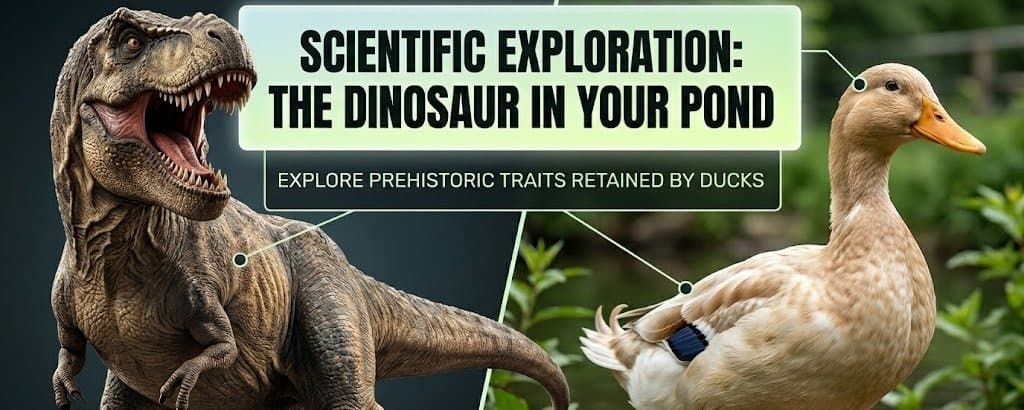
If you’ve ever looked into the eyes of a duck and felt like you were being watched by something prehistoric, you aren’t imagining it. Modern waterfowl are direct descendants of theropod dinosaurs — the same group that includes Tyrannosaurus rex and Velociraptor.
While they may look more waddly than vicious today, ducks still carry several high-performance biological features perfected millions of years ago.
1. Built-In Goggles: The Nictitating Membrane
Ducks have a third eyelid — the nictitating membrane — that moves horizontally across the eye instead of up and down.
In their dinosaur ancestors this membrane protected the eyes during high-speed movement or combat. In modern ducks it functions like a pair of swimming goggles: it lets them keep their eyes open underwater, filters debris, and keeps the cornea moist without fully blocking vision.
2. The “Dino-Skin” Legs
Look closely at a duck’s lower legs and feet and you will see scutes — tough, overlapping scales rather than feathers.
These scales are structurally similar to those found on many theropod dinosaurs. Birds evolved feathers for flight and insulation but retained scales on the feet for protection and durability. The same scaled skin also supports a counter-current heat exchange system that lets ducks stand on ice without freezing their feet.
3. Hollow Bones
Ducks are surprisingly light for their size because many of their bones are pneumatized (hollow and connected to the respiratory system).
Hollow bones were once thought to be purely an adaptation for flight. We now know many ground-dwelling dinosaurs had them as well. In ducks they provide structural strength for flight and buoyancy while keeping overall weight low.
4. The Respiratory Supercharger: Air Sacs
Ducks do not breathe with lungs alone. They have a system of air sacs that allows a continuous, one-way flow of air — so they receive fresh oxygen during both inhalation and exhalation.
This highly efficient respiratory design was a major advantage for active dinosaurs. In modern ducks it supports long-distance flight at altitude and sustained diving.
5. From Dinosaur Filaments to Waterproof Feathers
The fossil record shows that many dinosaurs already had downy coverings long before true flight evolved. Feathers likely began as insulation and display structures.
Ducks refined this ancient trait by adding a waterproofing layer of oil from the preen gland, turning what started as dinosaur insulation into a high-performance dry suit.
The Verdict
The next time you watch a duck dabble for peas or catch that clear third eyelid sliding across its eye, remember: you are not just looking at a farm animal. You are looking at a refined, feathered survivor of a lost world — one of the most successful dinosaur lineages still alive today.