
The Myth of the "Happy" Pond: Why Dumping Domestic Ducks is a Death Sentence
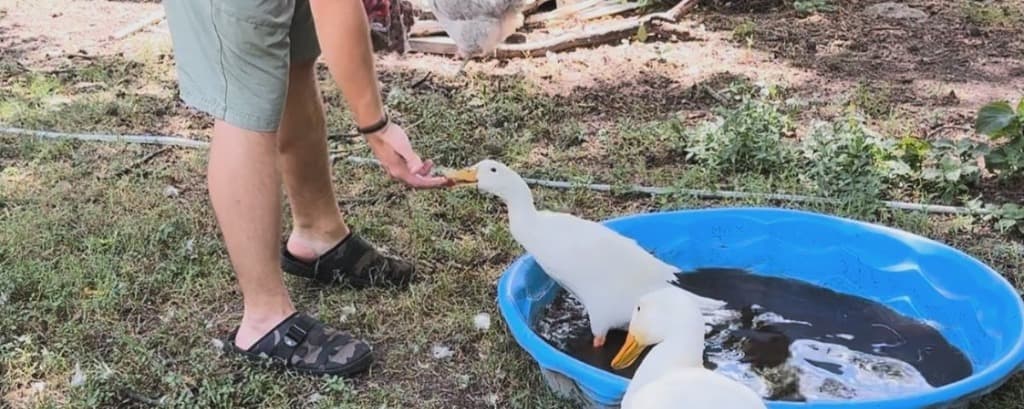
Every spring, parks and local ponds see a surge in colorful, fluffy residents. To the casual observer, it looks like nature is thriving. In reality, it is often a scene of slow-motion tragedy. Well-meaning people frequently “dump” domestic ducks at public waterways, assuming that because a bird has feathers and a bill, it will know how to be a duck.
This assumption is not just wrong — it’s lethal.
1. The Survival Gap: Bred to Depend, Not Defend
Domestic ducks have been selectively bred for thousands of years for high egg production, large body mass, and docile temperaments. In the process, they lost the survival traits required for the wild.
- Weight and Flight: Most domestic breeds (Pekins, Rouens, Cayugas, etc.) are too heavy for sustained flight. A wild mallard can explode into the air to escape danger. A domestic duck can only waddle and flap.
- Camouflage: Wild ducks are mottled and blend into reeds. Domestic ducks are often bright white or boldly colored — essentially a neon sign for predators.
- Foraging Instincts: Domestic birds are used to high-calorie feed in a bowl. They struggle to find enough natural food to support their larger body size, leading to malnutrition and conditions like Angel Wing.
2. The Gauntlet: Predators and Environment
A public park may look peaceful, but for a domestic duck it is a high-stakes survival game they are not equipped to play.
- Predators: Snapping turtles, hawks, owls, foxes, raccoons, and off-leash dogs all target them. Without flight or effective camouflage, their life expectancy is often measured in days or weeks.
- Disease: Public ponds can harbor duck plague, botulism, and cholera. Stressed, malnourished domestic birds are especially vulnerable and can also spread illness to wild populations.
3. The Ecological Ripple Effect
Abandoning domestic ducks creates broader problems:
- Genetic Pollution: Domestic ducks interbreed with wild mallards, potentially weakening important survival traits in wild populations.
- Habitat Damage: Large numbers of abandoned domestic ducks can overgraze vegetation and contribute to excess nitrogen in the water, increasing the risk of toxic algae blooms.
4. The Sanctuary Solution
This is why duck sanctuaries are not a luxury — they are a necessity. Domestic ducks are, by definition, dependent animals. When someone realizes that a cute Easter duckling has grown into a loud, messy adult, a sanctuary provides a real alternative to abandonment.
Sanctuaries offer:
- Rehabilitation for injuries, parasites, and Angel Wing
- Species-appropriate diets and predator-proof housing so birds can live out their full 8–12 year lifespans
- Education that ducks are a long-term commitment, not a seasonal pet
Domestic ducks are victims of their own history of service to humans. They deserve more than a desperate scramble for survival in a park pond. They deserve the safety and dignity of a home that understands exactly who — and what — they are.